

Central America's dishes blend age-old Aztec and Maya traditions with Spanish colonial and Afro-Caribbean influences. The region's produce is as diverse as its landscapes, from mountains and highlands to jungles and coast. Whether you’re chowing down on street eats, devouring farm-to-fork dishes, or splurging at gourmet restaurants, you’ll be captivated by the bold flavours. When you visit Central America, here are some of the standout dishes — and drinks — to add to your must-try list.
Grub’s up in Guatemala
Regarded as the national dish of Guatemala, pepián is a hearty stew found in local diners and street food stalls that's served with rice and corn tortillas. A fusion of Indigenous Maya and Spanish influences, it mixes meat — beef, chicken, pork, or all three — with vegetables and fruits, such as squash, corn, and pears. Its blend of roasted spices gives it a mildly bitter flavour.
Fiambre is another of Guatemala’s most iconic dishes, a cold salad prepared annually as part of the Día de los Muertos (Day of the Dead) celebrations. While the recipe varies from family to family, fiambre can contain up to 50 ingredients, including pork, chicken, shrimp, cured meats, cheese, boiled eggs, and pickled vegetables. It’s thought its origins lie in the tradition of people bringing the favourite dishes of their deceased family members to the cemetery, and eventually they were all mixed together.
On the Caribbean coast, Guatemala’s small but vibrant Garífuna community cooks up dishes like tapado, a rich seafood stew made with coconut milk, plantain, cassava, and aromatic herbs and spices. Atol de elote is a traditional hot drink made from corn and milk, perfect for beating the chill in the highlands.
Taste it for yourself on: Highlights of Guatemala
Munch your way around Mexico
Banish thoughts of boring burritos and tasteless Tex-Mex; Mexico's cuisine is hot right now, and it’s not just the chillies. It’s one of only four culinary traditions recognized by UNESCO, with everything from tempting tacos to fine-dining fusion.
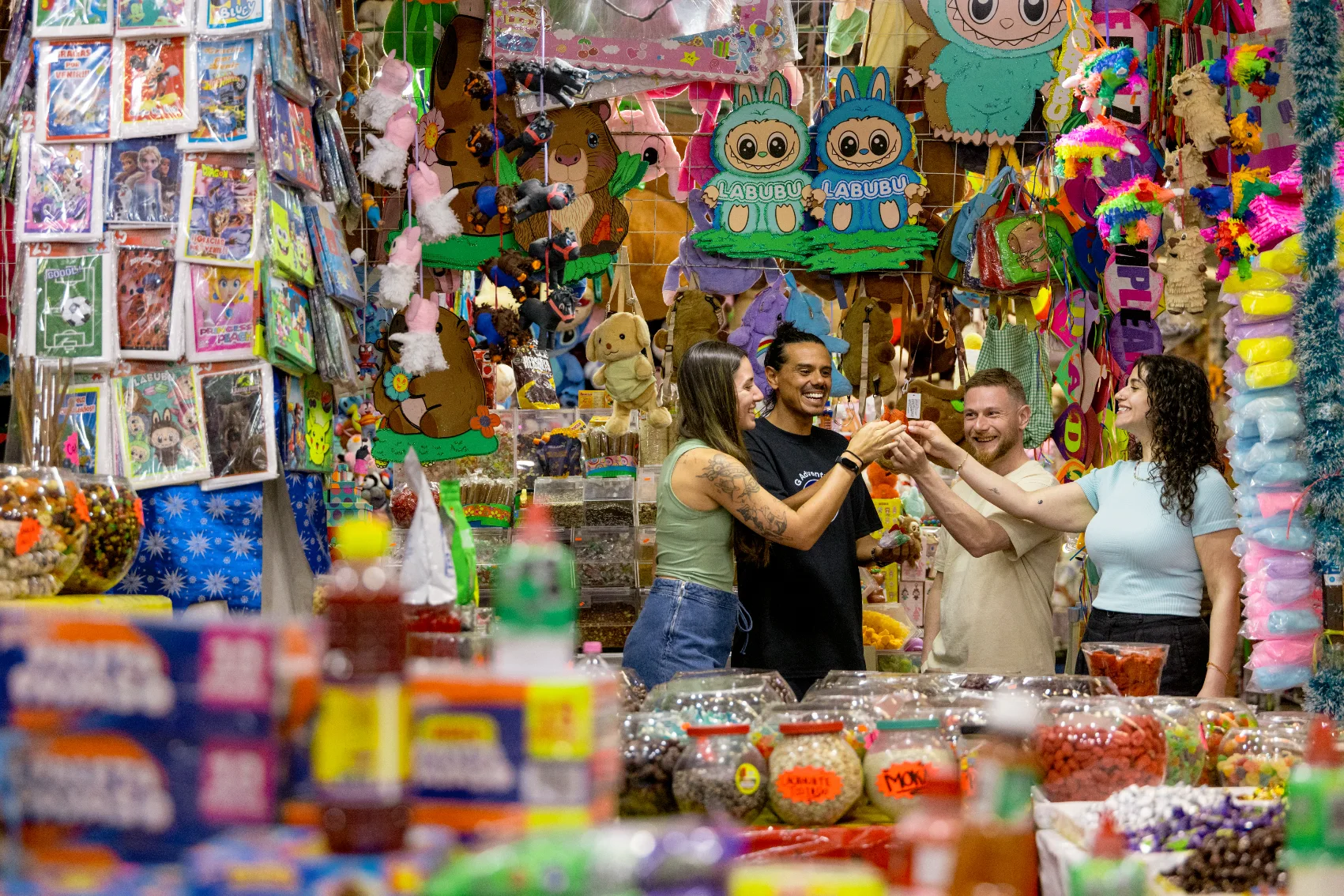
Mexico City’s world-renowned restaurants have taken traditional dishes to a new level, but Mexican street food is still as much a part of the city’s culture today as it was in pre-Hispanic times, and there’s a makeshift stall on every corner.
Tacos al pastor have Lebanese roots and are similar to kebabs. Also look for tlacoyos (blue corn cakes stuffed with ground fava beans), traditional quesadillas with huitlacoche (corn truffle), and flor de calabaza (squash blossom) — you’ll have to ask for cheese. Wash it all down with pulque, a mildly alcoholic drink made from the fermented sap of the maguey plant.
Oaxaca is home to mountains, jungle, and beaches, with a wealth of endemic produce. Mole (pronounced moe-lay) is Mexico’s national dish, an iconic sauce made from a rich mix of ingredients, including chocolate and chillies, while tlayudas have been dubbed "Mexican pizza." Oaxaca’s traditional tipple, mezcal, is a one-of-a-kind smoky spirit distilled from the maguey plant — try it with a side of chapulines, crunchy toasted grasshoppers.
Yucatecan cuisine mixes Maya and European ingredients, and its distinctive flavours are often based on elaborate blends of spices. That includes the famed cochinita pibil, slow-roasted pork marinated in achiote paste (made from ground annatto seeds), and relleno negro, turkey cooked in a black chilli paste.
The refreshing drink horchata is a mix of coconut, rice, coconut milk, water, cinnamon, and sugar. For something stronger, Xtabentún is an anise and honey liqueur based on a Maya ceremonial drink.
Taste it for yourself on: Classic Mexico Adventure
Hungry in Honduras
The mighty plato típico — grilled steak, rice, beans, plantains, cheese, and more — may be the national dish of Honduras, but unofficially it’s the baleada. In the early 1900s, baleadas were the main meal for banana plantation workers in the northern part of the country. Today, it’s a popular street snack everywhere, typically eaten for breakfast and accompanied by a cup of coffee.
In its simplest form, the baleada is a folded flour tortilla stuffed with refried beans, crumbled salty cheese, and a drizzle of mantequilla (similar to sour cream). After that, the choice is yours. Add scrambled egg, avocado, or Honduran-style chorizo —whatever is on hand that day. Just follow the locals and check out the most popular stands and flavour combinations.
Another must-try is the celebrated Garifuna dish, sopa de caracol, chunks of conch cooked in coconut milk with plantain, cassava, and spices. It even inspired a catchy song by the Honduran band, Banda Blanca.
Connoisseurs of unusual booze should try gifiti, a Garifuna elixir originally used for ceremonial purposes. Each vendor has his or her own recipe for this potent drink, a mix of bitter herbs and spices infused in sugarcane alcohol.
Taste it for yourself on: Basic Central America: Guatemala to Costa Rica
Have a bite in Belize
Belize’s melting pot of cultures has created a diverse cuisine, where Creole, Maya, and Garifuna influences mingle with African, Chinese, Indian, and Lebanese flavours.
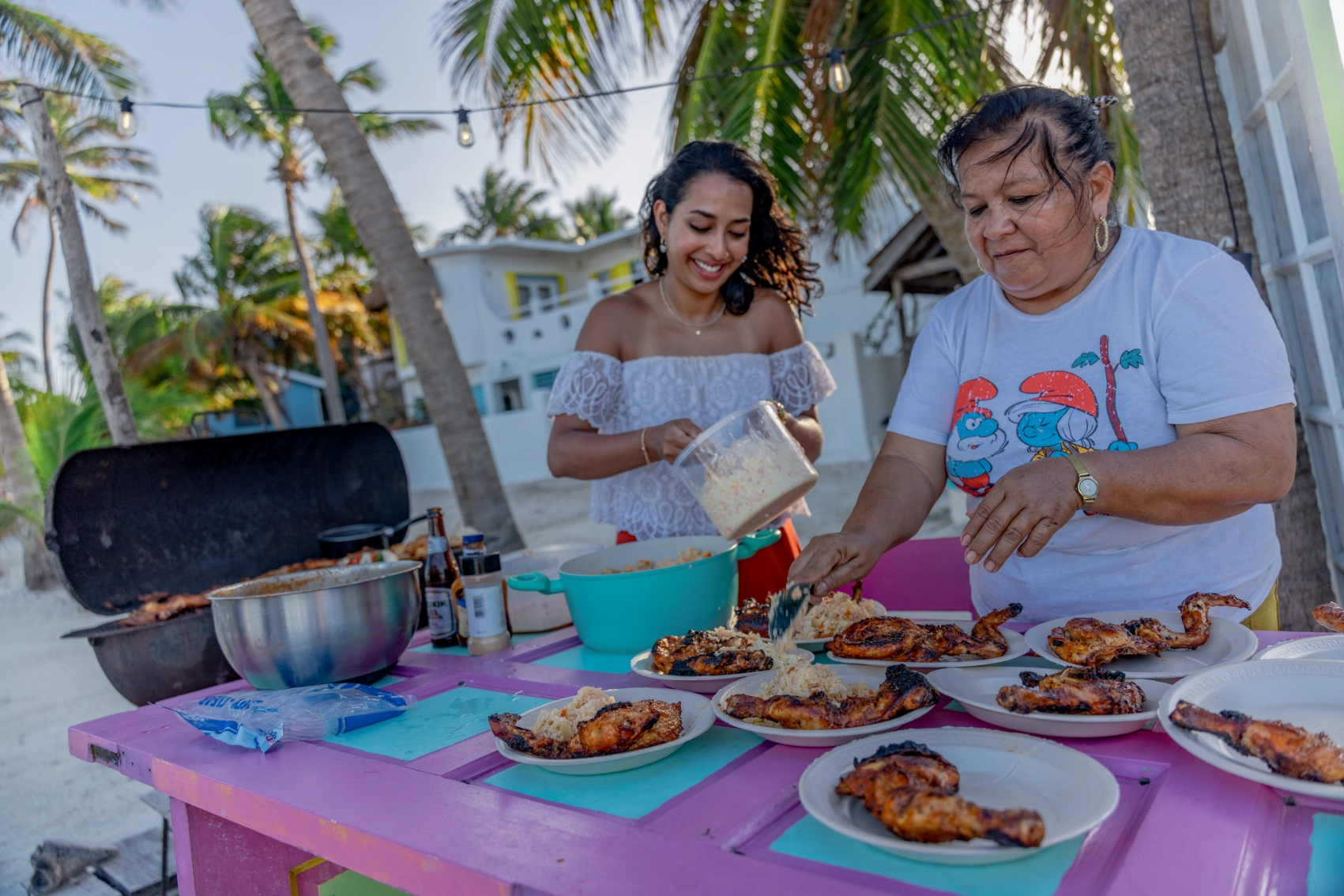
You’ll find rice and beans everywhere. What sets the Belizean version apart from the rest of Central America is the addition of coconut milk and spices to the red or black beans. Served with chicken marinated in a zesty achiote-based paste, it’s the country’s classic dish.
Belize has borrowed from the neighbouring Yucatan Peninsula for salbutes, a real street food treat. Deep-fried corn tortillas are topped with chicken or turkey and then smothered in beans, cheese, avocados, and pickled jalapeños.
Start the day with fry jacks, a staple of every breakfast menu. Parcels of dough are deep-fried until they’re golden brown and puffy. Eat them with eggs and refried beans; they’re extra delicious paired with fresh mango juice.
Taste it for yourself on: Solo-ish Belize
Eat well in El Salvador
The beloved national dish of El Salvador even has its own special day — the second Sunday in November is National Pupusa Day, celebrated with pupusa-eating competitions.
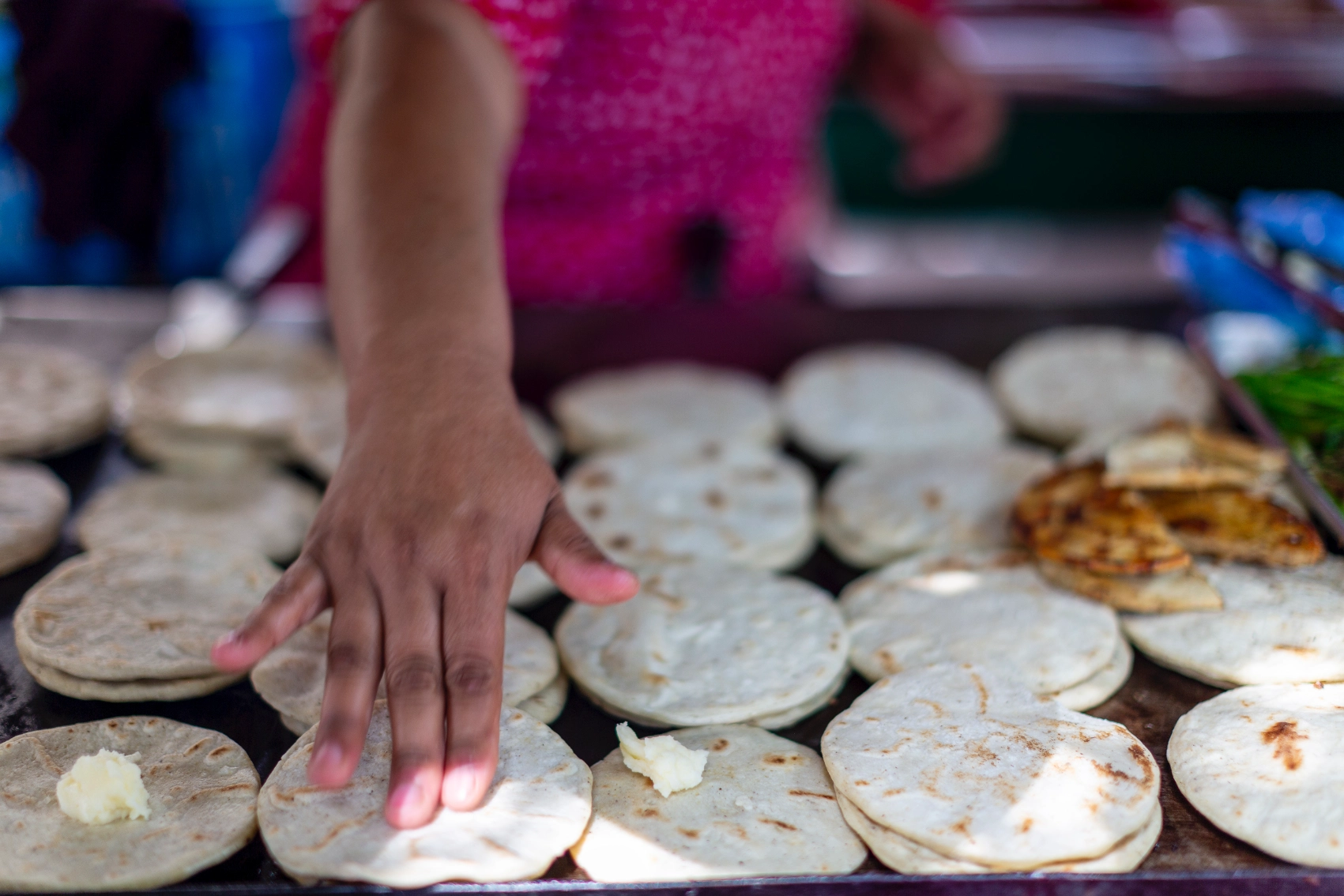
Dating back to pre-Hispanic times, pupusas can be found at street stalls or hole-in-the-wall restaurants called pupuserias. They’re corn-flour tortillas, stuffed with meat, beans, and cheese, and cooked on a griddle until they’re golden brown — there’s a cheese and loroco flower version for vegetarians. Served with zesty tomato salsa and slaw, they’re perfectly paired with thick hot chocolate for the ultimate comfort food combo.
Other typical sides are yuca frita (cassava fries), yuca con chicharrón (boiled cassava topped with fried pork rinds) that's served with a spicy tomato salsa, and the ubiquitous rice and beans, known in El Salvador as casamiento.
Wash it all down with a chilled horchata de morro, made with ground jícaro seeds mixed with water or milk, with added nuts, vanilla, and cinnamon, or Kolashanpan, a fizzy, sugary-sweet soft drink that tastes like bubblegum.
Taste it for yourself on: Basic Central America: Mexico to Costa Rica
The best Nicaraguan nibbles
Nicaragua may squabble with neighbouring Costa Rica over who does the best gallo pinto (rice and beans), but vigorón is the undisputed signature street food of the postcard-perfect city of Granada. A medley of soft-boiled cassava, topped with crispy chicharrón (fried pork rind) and curtido, a tangy cabbage slaw soaked in vinegar and lime juice, all wrapped in a banana leaf and eaten with your hands. It can get messy.
Don’t miss a taste of the award-winning Flor de Caña rum, the older the better. During production, it’s distilled five times and aged in oak barrels that have been used to mature bourbon.
The morning after, seek out the Nicaraguan take on a tamale, a nacatamale. Parcels of corn dough are filled with pork or chicken, rice, vegetables, and spices, wrapped in a plantain leaf and steamed, perfect with black coffee and traditionally eaten on Sunday mornings.
Or try a homegrown energy drink. Pinol is a corn and cacao-based beverage, spiced with cinnamon and cloves and mixed with water or milk, and served sweetened or unsweetened. It’s such a part of the culture that Nicaraguans often refer to themselves as "Pinoleros."
Taste it for yourself on: Basic Central America: Guatemala to Costa Rica
Chowing down in Costa Rica
Gallo pinto is Costa Rica's – and Nicaragua's – national dish, served with everything from eggs at breakfast to steak at dinner. The name translates as "spotted rooster," and it’s slightly different wherever you go, but it’s always a flavoursome fusion of rice and black beans stir-fried with onions, peppers, and coriander, with a spicy kick from Costa Rica's favourite condiment, Salsa Lizano.
Another quintessential Costa Rican dish is casado. It’s thought to date from the 1960s, when workers flooded into San José from the countryside and wanted to eat like casados (married men) while they were away from home. In foodie terms, it’s the marriage of gallo pinto, a protein — chicken, beef, pork, or fish — and sides, such as fried plantains. Guaranteed to be served at local sodas (small, family-run restaurants), it’s a budget-friendly way to fill up.
Thanks to its multitude of microclimates, Costa Rica has eight high-altitude regions that produce coffee, each with a distinct flavour, and it’s the only country in the world where it’s illegal to produce anything other than Arabica beans. Visit a coffee cooperative for a handpicked bean-to-cup tour.
If you grow tired of gallo pinto, get a taste of the dining scene around Monteverde, from farm-to-fork fare to fine-dining in a glass pod suspended in the clouds at the San Lucas Treetop Dining Experience. There’s craft beer, too.

Taste it for yourself on: Costa Rica Adventure
Pig out in Panama
Panama’s national dish is chicken soup, but not as you know it. Sancocho de gallina is a hearty bowl of deliciousness, filled with cassava, plantain, corn, herbs, spices, and a big chunk of chicken. Served with rice or tortillas, it’s eaten in all weathers for breakfast, lunch, and dinner, and it's considered a cure for colds and hangovers.
With its abundance of fish from two coastlines, tropical Panama is the perfect place to try ceviche. Slivers of raw fish — often corvina (sea bass) — are "cooked" in a mix of lime juice, herbs, and onions. You can find ceviche everywhere, from humble market stalls to upscale eateries.
To satisfy hunger pangs, the Panamanian go-to snack is a carimañola, deep-fried cassava dough stuffed with minced beef. And they’ve elevated toasted sandwiches (emparedados) to an art form.
Panama produces world-class coffee, and the finest beans are grown around Boquete. The country’s claim to fame is the legendary Geisha, one of the world’s most desirable — and expensive — coffees thanks to its delicate floral flavours. If your budget doesn’t stretch to a bag of beans, you can sample a cup for around US$10 at a Panama City café.
Taste it for yourself on: Costa Rica to Panama: Surf, Treks & Starry Skies


